Get to know the top legal recruiters in Washington, DC. With the Legal Recruiter Directory, attorneys can easily explore boutique recruiting firms and access larger regional and national agencies serving the area.
Beacon Hill Legal
Beacon Hill Legal specializes in attorney placements, helping law firms and corporations find top legal talent in the Washington, DC area. We connect highly qualified attorneys with prestigious legal opportunities.

Corporate Associate
Firm seeking associate with 3+ years of corporate experience and strong credentials to join a boutique practice offering top compensation, balance, and growth.
Construction Associate
Beacon Hill is working with a handful of well-respected construction litigation practices in Texas and along the east coast seeking associates with at least 2 years of on-point experience.
Experienced Attorney – Let’s Work Together
If you’re sharp, driven, and ready for a new challenge, contact us to learn more about how we can help advance your career.
Other Verified Washington DC Area Legal Recruiters
Adams & Martin Group
Alpert Associates, LLC
Berman & Beebe
Dresam Advisors
Faro Consultants International, LLC
Garrison & Sisson
Grover Bond
Heidrick & Struggles
Insight Global, LLC
KornFerry
Latitude Legal
Macrae
Madole Legal Search LLC
Major, Lindsey & Africa
Marcum Search
Mestel & Company
MillerBlowers
PLACED Legal Career Strategies
R & W Group
Reaction Search International
StevenDouglas
Stuart TenHoor Legal Search
The McCormick Group, Inc.
Topside, LLC
Tower Legal Solutions
Triumph Search Consultants, Inc.
All Other Washington DC Area Legal Recruiting Firms:
Job Opportunities
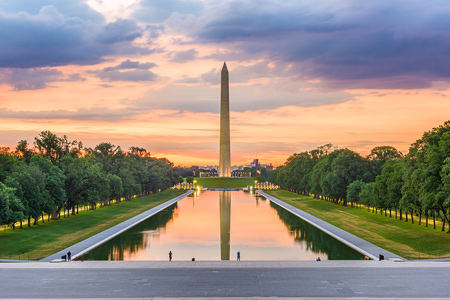
Many of the more than 50,000 attorneys in the greater D.C. area practice for the federal government. In addition to those working for Uncle Sam, there are more than 2,500 law firms and 1000s of corporations where lawyers earn an average annual base pay of $140,306. Career enrichment opportunities for attorneys living in Washington, D.C. include:
- District of Columbia Bar
- Inter-American Bar Association
- American Bar Association
- 6 ABA-accredited law schools
- Numerous other bar associations based on race, practice specialty, sexual orientation, gender, ethnicity and personal interests
Requirements to Practice Law
Admission policies for the D.C. Bar are set forth by the District of Columbia Committee on Admission. Applicants don’t have to graduate from an ABA-accredited law school, but any person who wishes to take the D.C. Uniform Bar Exam (UBE) must first pass 26 hours of coursework based on exam material. All applicants are required to hold a J.D. or L.L.M. degree before taking the UBE.
The Uniform Bar Exam (UBE) is administered twice a year, and has 3 parts:
- Multistate Performance Test
- Multistate Essay Exam
- Multistate Bar Examination
The application fee for taking the UBE is $214. Once you pass the exam, you must also complete a mandatory course on the D.C. Rules of Professional Conduct and District of Columbia Practice, and pass the Multistate Professional Responsibility Examination (MPRE). The D.C. Bar also accepts applications for Admission by Motion from attorneys in good standing who have already been practicing law in another U.S. jurisdiction for at least 5 years.
Once you have been admitted to the D.C. Bar, you will be invited to take an Oath of Admission before a panel of judges from the District of Columbia’s Court of Appeals. To maintain a law license in D.C. you do not have to fulfill any further CLE requirements. For more information, please visit: www.lawyeredu.org.
Why Washington D.C.?
Downtown Washington, D.C. is filled with unique eateries, upscale shops and performing arts centers where the city’s elite congregate. There are 16 Fortune 500 companies based in the D.C. area, including Lockheed-Martin, General Dynamics, Fannie Mae and Capital One Financial. The city’s robust economy competes globally in sectors like healthcare, finance, telecommunications, publishing and printing. D.C.’s cost of living runs higher than other U.S. cities mainly due to housing and transportation, but healthcare costs are lower.
The Washington Metropolitan Area Transit Authority (WMATA) provides commuter transportation services across the city via bus, light rail and subway. There are also 3 international airports in the D.C. area, Dulles, Ronald Reagan and Thurgood Marshall. Many attorneys commute to and from the downtown’s Legal District west of I-395 and north of the National Mall from some of Washington, D.C.’s better neighborhoods, like Au-Tenleytown, Cleveland Park, The Palisades, Chevy Chase and Georgetown.
In addition to its parks, 8 major league sports teams and historic buildings, other popular attractions in D.C. include the Smithsonian, National Gallery of Art, Lincoln Memorial, National Air and Space Museum, National Mall, historic Georgetown and Washington Monument. With respect to climate, in a typical year the area sees 43 inches of rain, below average amounts of snowfall, and about 200 days of sunshine. July is the warmest month, with daily highs near 90 degrees F, and January is usually the coldest month, with average lows near 27 degrees F.
Employers
Competition for legal talent is fierce. Gain the advantage and hire with confidence.
Candidates
Your next big opportunity is here.
We can help you find it.
Frequently Asked Questions
Washington D.C.’s candidate pool is highly educated and competitive, with many law school graduates from prestigious institutions such as Georgetown University Law Center and George Washington University Law School. The city attracts top legal talent from across the country, including many with experience in government, public policy, and international law. Additionally, the presence of numerous federal agencies, think tanks, and non-profit organizations contributes to a diverse and dynamic legal workforce.
In Washington D.C., there is a strong demand for lawyers specializing in regulatory and compliance law, government affairs, and lobbying, given the city’s proximity to federal agencies and legislative bodies. Other in-demand positions include intellectual property lawyers, healthcare attorneys, and litigators with expertise in complex commercial disputes and white-collar defense. The need for legal professionals with experience in environmental law and international trade is also significant due to the city’s role as a global policy center.
Several key industries shape the legal market in Washington D.C., including government and public policy, technology, healthcare, and finance. The presence of major corporations like Amazon and Lockheed Martin also drives demand for legal services in areas such as corporate law, intellectual property, and national security. Additionally, the city’s numerous non-profit organizations and international institutions, such as the World Bank and the International Monetary Fund (IMF), contribute to the diversity of legal practice areas.
Current trends in Washington D.C. are significantly impacting the legal field. The growing emphasis on regulatory compliance and government relations is increasing the demand for specialists in these areas. Advancements in technology and cybersecurity are driving the need for legal expertise, with cyberattacks increasing by 28% in the past year alone. The focus on social justice and public interest law is also gaining momentum, with many lawyers dedicating their careers to advocacy and policy reform. Furthermore, the rise of remote work is reshaping how legal professionals operate, offering greater flexibility and work-life balance. Recent surveys indicate that over 60% of D.C. law firms now offer hybrid work models, reflecting a significant shift in the traditional legal work environment.
Remote work has become more prevalent in Washington D.C.’s legal sector, offering lawyers greater flexibility and the ability to work from various locations. This shift has led to changes in compensation structures, with firms adopting more performance-based pay and bonuses to attract and retain top talent. The competitive nature of the D.C. market has also resulted in salary increases, particularly for specialized roles in high-demand areas like regulatory law and cybersecurity. Additionally, firms are investing in technology to support remote work and enhance productivity.
Diversity and inclusion are critical priorities in the Washington D.C. legal sector. Many law firms and organizations are actively working to create more inclusive workplaces by implementing diversity initiatives, offering mentorship programs, and promoting equitable hiring practices. The city’s diverse population and international influence contribute to a rich cultural environment within the legal community. Efforts to improve representation of women, minorities, and other underrepresented groups are ongoing, with many firms participating in programs like the Mansfield Rule to ensure a more inclusive legal profession.
Recent statistics specific to Washington D.C. highlight the city’s commitment to diversity. The District has a notably diverse population, with about 37.96% identifying as White, 40.91% as Black or African American, and 11.26% as Hispanic or Latino as of the 2020 Census. Additionally, D.C. is home to people from more than 170 nationalities, making it one of the most diverse cities in the United States. This multicultural environment is reflected in the legal sector, where diversity initiatives are gaining traction and leading to incremental changes in demographics and inclusion practices.