Get to know the top legal recruiters in Charleston. With the Legal Recruiter Directory, legal professionals can access a full list of recruiting firms in Charleston, along with contact details for established national players serving the area.
Verified Charleston Area Legal Recruiters
Carolina Legal Associates
Carolina Legal Staffing LLC
Reaction Search International
Need Help Finding a Recruiter?
All Other Charleston Area Legal Recruiting Firms:
Working with a Legal Recruiter in Charleston
Charleston’s legal market operates differently than larger, more saturated metros, which is why many attorneys find value in working with a recruiter who understands the city’s professional landscape. The market is driven by a mix of established law firms, growing corporate legal teams, and public-sector employers, with hiring shaped by both regional growth and the city’s business climate. Recruiters who are active in Charleston tend to have a clearer view of which employers are quietly expanding and where real opportunities exist beyond public job postings.
Attorneys working with Charleston-based recruiters often benefit from more candid insight into hiring expectations, firm culture, and long-term career prospects. That perspective can be especially useful for lawyers exploring opportunities tied to commercial real estate, business transactions, healthcare, environmental law, maritime matters, and litigation. For those relocating from larger markets, a recruiter can also help bridge the gap between broader experience and the more relationship-driven nature of Charleston’s legal community.
On the employer side, recruiters serve as a valuable filter in a market where reputation, fit, and professionalism carry significant weight. As Charleston continues to attract new businesses and investment across sectors such as aerospace, technology, healthcare, and development, firms and legal departments are increasingly selective about who they bring onto their teams. Recruiters who understand both the talent pool and the expectations of local employers can help facilitate stronger, more durable hiring decisions.
Job Opportunities
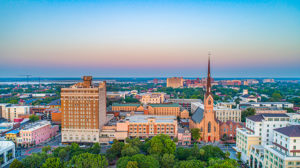
There are 4,000+ lawyers that practice in the Charleston area at its 180+ law firms, dozens of government agencies or various corporate counsel departments. Those attorneys earn an average salary of $124,201 while enjoying career-enrichment activities through these professional organizations:
- South Carolina Bar
- Charleston County Bar Association
- Charleston School of Law
- Other state and local bar associations based on specific membership criteria
Requirements to Practice Law
To practice law in Charleston and throughout South Carolina, applicants must meet the admission standards established by the South Carolina Supreme Court. Most candidates qualify by earning a J.D. from an ABA-accredited law school, passing the South Carolina Bar Examination, and obtaining a qualifying score on the Multistate Professional Responsibility Examination (MPRE). All applicants must also satisfy the state’s character and fitness review before being formally admitted.
Newly admitted attorneys are required to complete South Carolina’s Bridge the Gap program, which focuses on professionalism and practical skills during the early stages of practice.
To maintain an active law license in South Carolina, attorneys must complete 14 hours of Continuing Legal Education (CLE) each year, including at least 2 hours in ethics or professional responsibility.
Licensing and Bar Admission for Out-of-State Attorneys
Attorneys licensed in other U.S. jurisdictions who are considering a move to Charleston should be aware that South Carolina’s admission rules differ from those in many states. South Carolina does not generally offer Admission on Motion (reciprocity) for experienced attorneys licensed elsewhere. As a result, most out-of-state lawyers who wish to become fully licensed must plan to sit for and pass the South Carolina Bar Examination.
Foreign-educated attorneys are not eligible for admission based on a foreign law degree alone. However, they may become eligible after completing a J.D. or qualifying LL.M. program at an ABA-accredited law school that satisfies South Carolina’s educational requirements.
Because Charleston attracts attorneys from across the Southeast for roles in real estate, litigation, healthcare, maritime law, and corporate practice, understanding licensing expectations early in the relocation process is important. Working with a recruiter who understands South Carolina’s admission structure can help candidates assess feasibility, anticipate timelines, and align job opportunities with the steps required to become licensed in the state.
Employers
Competition for legal talent is fierce. Gain the advantage and hire with confidence.
Candidates
Your next big opportunity is here.
We can help you find it.
Frequently Asked Questions
The candidate pool in Charleston is diverse and highly educated, with many law graduates from local institutions such as the Charleston School of Law and the University of South Carolina School of Law. The city attracts legal professionals from across the country due to its vibrant culture and growing economy.
According to the Charleston Regional Development Alliance, the region’s population has grown by over 20% in the past decade, contributing to a steady influx of qualified candidates. The legal community is known for its strong emphasis on both traditional practice areas and emerging fields like environmental and intellectual property law.
In Charleston, there is a high demand for legal positions in corporate and business law, driven by the presence of major employers like Boeing and Blackbaud. Healthcare law is also significant due to institutions like MUSC and Roper St. Francis Healthcare. Environmental law is increasingly important given Charleston’s coastal location and environmental regulations. Additionally, there is a robust need for real estate attorneys due to the booming real estate market.
Several key industries shape Charleston’s legal market, including aerospace, healthcare, and technology. The aerospace sector, led by Boeing, requires extensive corporate, compliance, and intellectual property legal services. The healthcare industry, with major players like MUSC and Roper St. Francis Healthcare, drives the demand for healthcare law expertise.
The tech sector, highlighted by companies like Blackbaud and a growing startup ecosystem, necessitates legal services in intellectual property and cybersecurity. Additionally, Charleston’s thriving tourism and real estate markets create substantial needs for legal expertise in real estate, environmental law, and hospitality-related legal matters.
Current trends in Charleston are significantly reshaping the legal field. The city’s emphasis on sustainability has heightened the demand for environmental law expertise, particularly in coastal preservation and land use.
The tech boom, driven by companies like Blackbaud and an increasing number of startups, is expanding the need for intellectual property and cybersecurity legal services. Additionally, the focus on social justice and equity has led to more robust employment and labor law practices, as high-profile cases involving workplace discrimination and wage disputes become more common. These trends are driving a dynamic and responsive legal market.
The shift to remote work has profoundly impacted Charleston’s legal sector. Many law firms now offer flexible work arrangements, enhancing work-life balance and attracting top talent from beyond the region. This transition has also influenced compensation structures, with firms adjusting salaries to reflect remote work savings and competitive market rates. The average lawyer salary in Charleston is $124,201, reflecting these adjustments.
Remote work has also expanded opportunities for professional development and client engagement, allowing legal professionals to utilize technology for virtual consultations, continuing education, and networking events, further integrating modern practices into the traditional legal framework.
Diversity and inclusion are increasingly prioritized in Charleston’s legal sector. Efforts to promote inclusivity are evident through organizations like the Charleston County Bar Association’s Diversity Committee, which focuses on enhancing representation and support for minority lawyers.
Local firms are implementing more inclusive hiring practices and creating mentorship programs aimed at underrepresented groups. Additionally, events such as the annual Diversity Summit highlight ongoing commitments to equity and inclusion. Despite these advancements, challenges remain, but the legal community continues to make significant strides towards creating a more diverse and inclusive environment that reflects Charleston’s rich cultural tapestry.